
우주를 가득채운 은은한 중력의 콧노래를 찾다
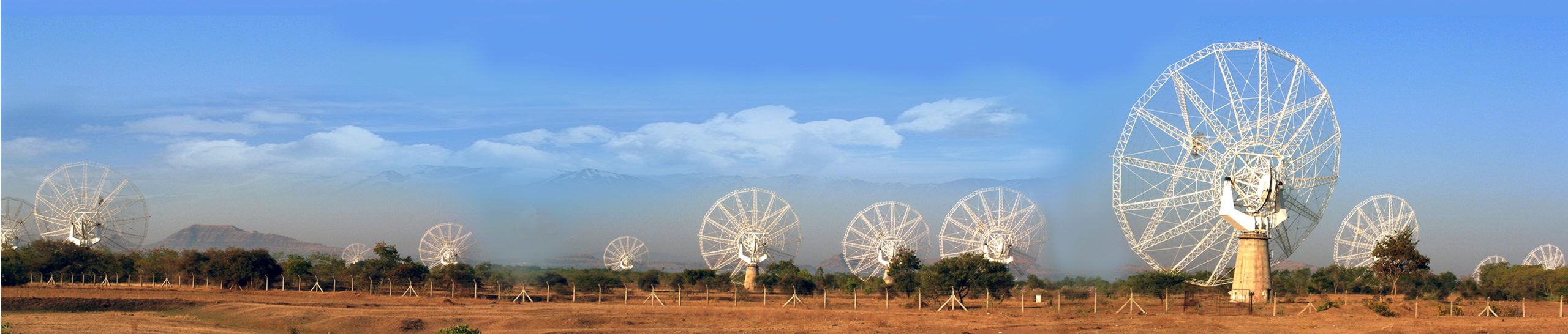
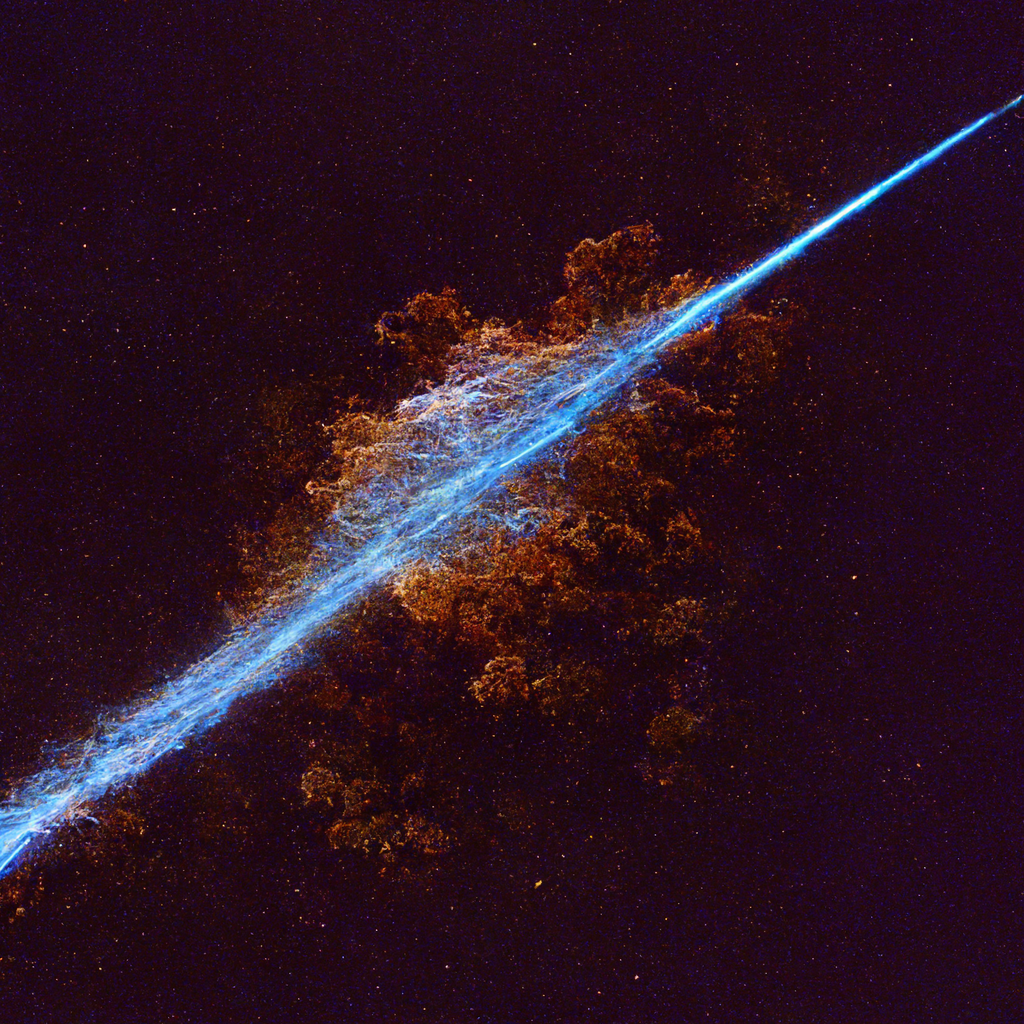
인도, 일본, 유럽의 국제 천문학자 팀이 회전하는 중성자별 천체인 펄사(Pulsar)를 오랫동안 관측한 결과를 발표했다. 펄사는 자연에 존재하는 가장 정확한 시계로서 이번 관측에는 인도의 uGMRT를 포함하여 세계에서 가장 민감한 전파 망원경 6개가 사용되었다. 결론적으로 연구팀은 초저주파 대역의 중력파에 의해 만들어지는 시공간의 끊임없는 진동에 대한 단서를 찾아낸 것이다. 두개의 블랙홀이 서로 만나면 함께 춤을 추듯이 움직이며 중력파를 만들어 내는데 이번에 관측된 중력파 배경신호는 태양보다 1억 배나 무거운 초거대 괴물 블랙홀들의 수많은 쌍들로 부터 만들어지는 것으로 추정된다. 이들 팀의 관측 결과는 중력파의 저주파 스펙트럼 관측을 통한 우주의 비밀을 여는 연구에 새 지평을 여는 중요한 이정표가 될 것이다. 춤추는 괴물 블랙홀 쌍은 충돌하는 은하의 중심에 숨어있을 것으로 추정한다. 이들의 춤은 10년을 주기로 반복되기 때문에 이로부터 발생한 중력파는 나노 헤르츠의 진동수를 가지며 파장은 10광년에 달할 정도로 길다. 수없이 많은 초대질량 블랙홀 쌍에서 나오는 중력파의 신호들은 합쳐져서 우리 우주가 나지막한 콧노래를 끊임없이 부르게 만든다. EPTA(European Pulsar Timing Array) 및 InPTA(Indian Pulsar Timing Array) 컨소시엄은 천문학 및 천체물리학 저널 (Astronomy and Astrophysics)에 2편의 논문으로 발표했으며 이 논문에 소개된 결과는 이러한 배경 중력파의 존재를 암시한다.
이러한 거대 규모의 중력파 물결을 관측하기 위한 거의 유일한 방법은 펄사를 활용한 은하 크기의 중력파 탐지기를 사용하는 것이다. 펄사는 빠르게 회전하는 중성자별의 일종으로 거대한 별이 죽음을 맞이하여 만들어지는 천체이다. 펄사는 마치 항구 근처의 등대처럼 주기적으로 지구를 비추며 우주 스케일의 시계 역할을 한다.
천문학자들은 인도의 uGMRT를 포함한 세계 최고의 전파 망원경들을 사용하여 이러한 펄사들을 모니터링하고 있다. 최근 몇 년 동안 uGMRT는 펄사를 우주 시계로 사용하도록 전자기 펄스 측정의 정확도를 높이는데 큰 기여를 하였다.
10여년간 InPTA 컨소시엄을 설립하고 이끌어온 Balchandra Joshi 교수 (NCRA-TIFR)는 “아인슈타인의 일반상대론에 따르면 중력파는 이러한 전자기 펄스의 도착 시간을 변화시켜 우주 시계에 영향을 미칩니다. 이러한 중력파의 효과는 너무 작기 때문에 이것을 다른 잡음으로부터 분리하기 위해선 uGMRT와 같은 정밀한 전파 망원경과 펄사들의 네트워크가 필요 합니다. 또한 중력파의 신호가 느리게 변화하기 때문에 이러한 중력파를 보는데는 수십년이 걸립니다.”
EPTA와 InPTA의 과학자들은 25년간 6개의 세계 최대 전파망원경들을 이용해 측정한 펄사의 주기 변화 데이터에 대한 상세한 분석 결과를 발표했다. 여기에는 uGMRT 고유의 낮은 진동수 전파에 대한 정밀한 관측 데이터가 사용되었다. 이 데이터들을 분석한 결과 25개 펄사의 우주 시계에 공통적으로 나타나는 특징적인 불규칙성이 있음이 밝혀졌다. 이것은 나노 헤르츠 중력파가 생성하는 효과와 일치한다.
uGMRT를 운영하는 NCRA-TIFR의 책임자인 Yashwant Gupta 교수는 “uGMRT의 데이터가 중력파 천문학에 대한 국제적 협력에 사용되는 것을 보는 것은 정말 고무적입니다. 중력파 관측을 위한 펄사의 고정밀 측정은 우리가 2013년에서 2019년 동안 수행한 GMRT 업그레이드의 중요한 과학 목표 중 하나였으며 업그레이드가 완성된지 몇년 지나지 않아 이렇게 결실을 맺는 것을 보게 되어 매우 기쁩니다. 업그레이드된 GMRT에서 우리가 설계하고 만든 광대역 수신기 시스템은 GMRT가 낮은 진동수 전파에서 고품질의 데이터를 얻는 것을 가능하게 하며 이를 통해 중력파 관측을 위한 국제 협력에 중요한 기여를 할 수 있었습니다.”라고 이번 결과에 대해 말하였다.
나노 헤르츠 중력파는 우주의 비밀에 대한 많은 정보를 준다. 태양 질량보다 10억에서 100억배 정도 더 큰 질량을 가진 초대질량 블랙홀들은 그들의 부모 은하들의 병합으로 부터 형성되며 이 과정에서 나노 헤르츠 중력파가 발생할 것으로 예상된다. 게다가, 태어난지 수초 이내의 초기 우주에서도 다양한 현상들로부터 나노 헤르츠 중력파가 발생할 수 있다. InPTA 컨소시엄의 대표인 A. Gopakumar 교수(TIFR 소속)는 다음과 같이 그 의미를 부여하였다. “오늘 발표된 결과는 이러한 우주의 미스터리를 밝히기 위한 새로운 여정의 시작을 의미합니다. uGMRT가 처음으로 중력파 관측을 위해 사용된 것도 중요한 의미를 가집니다.”
이러한 중력파 신호를 감지하기 위해 천문학자들은 “Pulsar Timing Array”(PTA)라고 불리는 은하 규모의 중력파 검출기를 사용한다. 여기에는 우리 은하 전체에 분포하는 매우 안정적인 주기를 가진 펄사들이 우주 시계로서 사용된다. 또한, 중력파의 정보를 추출하기 위해 수십 년 동안 관측된 펄사의 주기를 서로 비교한다. 전자기 펄스가 시공간을 이동하면서 중력파는 고유한 방식으로 전파에 영향을 미친다. 일부 펄스는 약간(100만분의 1초 미만) 늦게 도착하고 일부는 조금 더 일찍 도착하는 식이다.
우리 은하에서 엄선된 25개의 펄사를 사용하여 만들어진 이 거대한 은하 크기의 중력파 검출기는 2015년 LIGO에 의해 처음 관측된 중력파보다 100억 배 느린 진동수를 가진 중력파 측정을 가능하게 해준다. A. Gopakumar 교수는, “킬로미터 크기의 LIGO는 몇 초 동안 지속되는 중력파 신호를 보는 반면 은하 크기의 PTA는 우리 우주의 영구적인 진동, 즉 나노 헤르츠 주파수의 중력파 배경을 감지하기 시작했습니다. 우주를 바라보는 이러한 새로운 창은 가까운 미래에 SKA(Square Kilometer Array)와 같은 새로운 망원경으로 인해 더 넓어질 것으로 예상됩니다”라고 전망했다.
현재의 결과는 유럽에서 가장 큰 5개의 전파 망원경(독일의 Effelsberg 100-m 전파 망원경, 영국 Jodrell Bank 천문대의 Lovell 망원경, 프랑스의 Nancay 전파 망원경, 이탈리아의 Sardinia 망원경, 네덜란드의 Westerbork 전파 합성 망원경)을 사용하는 공동 관측을 기반으로 하고 있다. 이 관측 데이터를 보완하기 위해 uGMRT의 관측 데이터가 분석에 포함되었다.
 Max-Planck 전파천문학 연구소 소장 Michael Kramer 교수는 “유럽, 인도 및 일본의 연구자들의 국제적인 협력은 성공적이었고 과학적으로도 중요한 결과를 가져왔습니다. 이러한 우리의 경험이 성공적인 IPTA(International PTA)를 만드는데 롤 모델이 되기를 바랍니다.”라며 국제적 협력을 강조했다.
오늘 발표된 EPTA+InPTA의 데이터 분석 결과는 중력파의 영향으로 여겨지는 효과가 여러 펄사들에 걸쳐서 공통적으로 나타남을 보여주었다. 일본에서 EPTA+InPTA 협력 연구단을 이끄는 Kumamoto 대학의 Keitaro Takahashi 교수는 “중력파의 신호는 펄사 관측을 통해 지속적으로 나타났고 마치 정밀한 우주 시계가 파동에 의해 흔들리는 것 처럼 나타났다. 이러한 결과는 천체물리학자들이 예상하던 바로 그것이었다.”라고 말했다.
EPTA+InPTA 결과는 전 세계의 다른 PTA들, 즉 호주(PPTA), 중국(CPTA) 및 북미(NANOGrav)에서 발표한 결과에 의해 더욱 지지되고 있다. 나노 헤르츠 중력파에 대한 같은 증거를 NANOGrav에서도 확인하였으며 CPTA와 PPTA의 결과와도 일치한다.
흥미롭게도 EPTA, InPTA, PPTA 및 NANOGrav 네 그룹의 협력을 통해 100개 이상의 펄사로 구성된 IPTA(International Pulsar Timing Array)의 데이터를 결합하는 작업이 이미 진행중에 있다. IPTA는 기존의 PTA들보다 더 좋은 감도를 가지기 때문에 중력파 배경을 만들어 내는 다양한 현상들에 대해 많은 시사점을 줄 수 있을 것으로 기대된다.
향후 몇년 안에 IPTA 컨소시엄은 OJ 287이라는 활동적인 은하 중심부 초대질량 블랙홀의 쌍성이 만들어내는 중력파를 관측 할 수 있을 것으로 기대된다. 이러한 노력은 중력파 관측과 전자기파 관측이 동시에 이루어지는 다중신호 천문학을 가능하게 하며 은하에 대한 더욱 풍부한 천체물리학적 정보를 주게 될것이다.
InPTA 관측에는 인도의 NCRA, TIFR, IIT, IISER, IMSc, RRI 연구원들과 함께 일본의 Kumamoto 대학의 연구원들이 함께 참여했다. 최근 서울대학교 이형목 교수가 이끄는 한국 중력파 연구 협력단(KGWG)의 연구원들 또한 InPTA와 IPTA를 통해 이러한 국제적인 노력에 참여하기 시작했다. 현재 이들은 InPTA의 멤버로 활동하며 펄사 타이밍 관측 및 광대역 데이터 분석과 같은 작업에 기여하고 있다. 특히 이 작업에는 기초과학연구원(IBS)의 고성능 컴퓨팅 자원도 중요하게 활용되고 있다. KGWG의 연구원들은 2010년 부터 LSC(LIGO 과학 협력단), 2011년 부터 일본의 KAGRA 프로젝트와 협력하면서 2015년 최초의 중력파 검출, 2017년 최초의 다중신호 천문학 관측 등에 기여한 바가 있다.
KGWG는 앞으로 InPTA와 IPTA에 지속적으로 참여하여 저진동수 중력파로 연구 영역을 확장하고자 한한다. 중력파 우주연구단에서는 중성자별이 포함된 쌍성 병합에서 나오는 광학 신호를 포착하기 위한 지름 50cm 망원경 20개로 구성된 7DT(7-Dimensional Telescope)를 칠레에 건설하고 있다.
2023년 6월 29일
제공 및 번역, 감수: 이형목, 박찬, 오정근
Hint for relentless humming of universe
by low frequency gravitational waves
An International team of astronomers from India, Japan and Europe has published the results from monitoring pulsars, nature’s best clocks, using six of the World’s most sensitive radio telescopes, including India’s largest telescope uGMRT. These results provide a hint of evidence for the relentless vibrations of the fabric of the universe, caused by ultra-low frequency gravitational waves. Such waves are expected to originate from a large number of dancing monster black hole pairs, a hundred million of times heavier than our Sun. The team’s results are a crucial milestone in opening a new, astrophysically-rich window in the gravitational wave spectrum.
Such dancing monster Black Hole pairs, expected to lurk in the centers of colliding galaxies, create ripples in the fabric of our cosmos, and astronomers call them nano-hertz gravitational waves as their wavelengths can be ten light years. The relentless cacophony of gravitational waves from a large number of supermassive black hole pairs create a persistent humming of our universe. The team, consisting of members of the European Pulsar Timing Array (EPTA) and Indian Pulsar Timing Array (InPTA) consortia, published their results in two papers in the Astronomy and Astrophysics journal and their results hint at the presence of such gravitational waves in their data set.
These light-year-scale ripples can only be detected by synthesizing a galactic-scale gravitational-wave detector using pulsars-the only accessible celestial clocks for humans. Pulsars are a type of rapidly rotating neutron stars that are essentially members of dead stars, present in our galaxy. Fortunately, a pulsar is a cosmic lighthouse as it emits radio beams that flash by the Earth regularly just like a lighthouse near a harbor.
Astronomers monitor these pulsars using the best radio telescopes of the world including India’s premiere radio telescope, the uGMRT, situated near Pune. In recent years, uGMRT has made significant contributions in precisely recording the little flashes of pulsar’s radio beams so that we can use pulsars as celestial clocks.
“According to Einstein, gravitational waves change the arrival times of these radio flashes and thereby affect the measured ticks of our cosmic clocks. These changes are so tiny that astronomers need sensitive telescopes like the uGMRT and a collection of radio pulsars to separate these changes from other disturbances. The slow variation of this signal has meant that it takes decades to look for these elusive nano-hertz gravitational waves” explains Prof. Bhal Chandra Joshi of NCRA-TIFR, Pune who founded the InPTA collaboration during the last decade.
Scientists of the EPTA in collaboration with the Indo-Japanese colleagues of the InPTA have reported detailed results of analyzing pulsar data collected over 25 years with six of the world’s largest radio telescopes. This includes more than three years of very sensitive data collected using the unique low radio frequency range and the flexibility of India’s largest radio telescope – the uGMRT. The analysis of this unique data set has revealed that the measured rate of ticking of these cosmic clocks has characteristic irregularities, common across the twenty-five pulsars that have been monitored. This is consistent with the effect produced by gravitational waves at ultra-low frequency (waves that oscillate with periods between one and ten years).
Prof Yashwant Gupta, Centre Director at NCRA-TIFR which runs the uGMRT, commented “It is fantastic to see our unique uGMRT data being used for the ongoing international efforts on gravitational wave astronomy. Carrying out high precision timing of pulsars for such a purpose was one of the crucial science targets of the major upgrade of the GMRT that we carried out during 2013-2019, and I am extremely pleased to see it producing fruit within the first few years. The wideband receiver systems that we designed and built for the upgraded GMRT are the ones that have enabled the high-quality data from the lower radio frequencies that the GMRT is contributing to the international collaboration”.
Not surprisingly, nano-hertz frequency gravitational waves carry information about some of the best-kept secrets of the Universe. The cosmic population of black hole pairs with masses that are one-to-ten billion times more than the mass of our Sun are expected to be formed when their parent galaxies merge and such a population emits gravitational waves at these frequencies. Further, various other phenomena that may have taken place when the Universe was in its infancy, just a few seconds old, also produce these waves at these astronomically long wavelengths. According to Prof. A. Gopakumar, TIFR, Mumbai, and Chair of the InPTA consortium, “The results presented today mark the beginning of a new journey into the Universe to unveil some of these mysteries. More importantly, this is the first time that an Indian telescope’s data is used for hunting gravitational waves”.
To detect these gravitational-wave signals, astronomers in a “Pulsar Timing Array” (PTA) collaboration exploit many ultra-stable pulsar clocks, distributed across our Milky Way galaxy, to create a “galactic-scale gravitational-wave detector”. Measurements of the exact arrival times of the pulsars, which have been going on for decades, are being compared with each other to study the influence of gravitational waves. As radio signals travel through space and time, the presence of gravitational waves affects their path in a characteristic way: some pulses will arrive a little (less than a millionth of a second) later, some a little earlier.
This gigantic galactic-size GW detector synthesized by incorporating 25 meticulously chosen pulsars in our Milky Way Galaxy makes it possible to access the variations in the pulse arrival times created by gravitational waves with a frequency of oscillation 10 billion times slower than those first observed in 2015 by the two ground-based LIGO detectors in the United States of America. “Interestingly, kilometer-sized LIGO sees flashing gravitational wave signals that last for seconds. In contrast, our galaxy-sized PTA is beginning to sense a permanent vibration of the fabric of our universe or in other words a gravitational wave background at nano-hertz frequencies. The resulting new window to the universe is expected to get wider with new telescopes like the Square Kilometre Array (SKA) in the near future where India is expected to play a decisive role”, says Prof. A. Gopakumar.
The current results are based on a coordinated observing campaign using the five largest radio telescopes in Europe: the 100-m Effelsberg Radio in Germany, the Lovell Telescope of the Jodrell Bank Observatory in the United Kingdom, the Nancay Radio Telescope in France, the Sardinia Radio Telescope in Italy and the Westerbork Radio Synthesis Telescope in the Netherlands. To complement this data set, observations with the upgraded Giant Metrewave Radio Telescope in India were included in the analysis. Once a month, the European telescopes are additionally added together to give an extra boost to the sensitivity.
“Our collaboration between colleagues across Europe, India, and Japan not only shows that an international effort is successful and very rewarding scientifically, but we hope to also serve as a role model for the global IPTA efforts”, says Prof. Michael Kramer, Director – Max-Planck-Institut für Radioastronomie, Bonn, Germany who along with Prof. Bhal Chandra Joshi is instrumental in creating close collaborations between the European and Indian PTAs.
The analysis of the European and Indian Pulsar Timing Array (EPTA+InPTA) data which is presented today has revealed the presence of a common signal across the pulsars in the array which is broadly in agreement with being due to gravitational waves. “The signal is persistent throughout the many years of monitoring of these pulsars, as if these cosmic clocks are pitching and rolling in the waves of space-time. This emerging evidence is in line with what astrophysicists expect”, says Prof. Keitaro Takahashi, Kumamoto University, Japan who leads Japanese efforts with his Indian and European colleagues.
The EPTA+InPTA results are complemented by the coordinated publications made by other PTAs across the world, namely the Australian (PPTA), Chinese (CPTA) and North-American (NANOGrav) pulsar timing array collaborations. This same evidence for gravitational waves is seen by NANOGrav and is consistent with results reported by the CPTA and PPTA.
“The results reported by the EPTA+InPTA collaboration are tantalizingly close to the discovery of nano-hertz gravitational waves and are the culmination of many years of efforts by many scientists including early career researchers and undergraduate students. We are grateful to the NSM computing facilities at IIT Hyderabad and IIT Roorkee, along with the computing infrastructure of NCRA, Pune and TIFR, Mumbai which helped to unveil these results”, states Prof. Shantanu Desai of IIT, Hyderabad.
Importantly, work is already in progress where scientists from the four collaborations – EPTA, InPTA, PPTA, and NANOGrav – are combining their data sets under the auspices of the International Pulsar Timing Array (IPTA) to create an array consisting of over 100 pulsars that may allow them to reach this goal in the near future. This combined IPTA data set is expected to be more sensitive and scientists are excited about the constraints they can place on the GWB along with understanding various other phenomena that may have taken place when the Universe was in its infancy, just a few seconds old, which can also produce gravitational waves at these astronomically long wavelengths.
“This is really exciting”, says Dr. Pratik Tarafdar of The Institute of Mathematical Sciences, Chennai, who feels that “we are within a whisker of achieving such dynamic range where one can finally listen to the bass sections in this cosmic gravitational-wave-symphony.”
In the subsequent years, the IPTA consortium expects to find gravitational waves from individual pairs of monster black holes like the one suspected to lurk in a very active galaxy called OJ 287. Such discoveries will enhance astrophysical information that can be extracted from PTA observations, similar to the iconic neutron star merger GW170817, observed by LIGO and many telescopes in the electromagnetic spectrum during 2017. “Along with the upcoming Square Kilometre Array, this pancontinental collaboration is expected to fully complement the discoveries from future space-based and ground-based gravitational wave observatories including LIGO-India”, believes Prof. Bhal Chandra Joshi.
The InPTA experiment involves researchers from NCRA (Pune), TIFR (Mumbai), IIT (Roorkee), IISER (Bhopal), IIT (Hyderabad), IMSc (Chennai), and RRI (Bengaluru) along with their colleagues from Kumamoto University, Japan. Recently, researchers from the Korean Gravitational Wave Group (KGWG) led by Prof. Hyung Mok Lee, director of the Center for the Gravitational-wave University at Seoul National University have started to participate in these international efforts through InPTA and IPTA. Currently, they are contributing to tasks such as pulsar timing observations and wideband data analysis in InPTA. In particular, high-performance computing resources in IBS are being utilized for these tasks. KGWG members have been collaborating with LIGO (since 2010) and KAGRA (since 2011), contributing to the first detection of gravitational waves in 2015 and multi-messenger observations in 2017.
KGWG is looking forward to the extension of its activities in lower-frequency gravitational wave research through participation in InPTA and IPTA. The Center for the Gravitational-Wave Universe is now constructing 7-Dimensional Telescope (7DT) composed of 20 telescopes of 50-cm aperture in Chile in order to identify the optical counterpart of the gravitational-wave source involving at least one neutron star.